
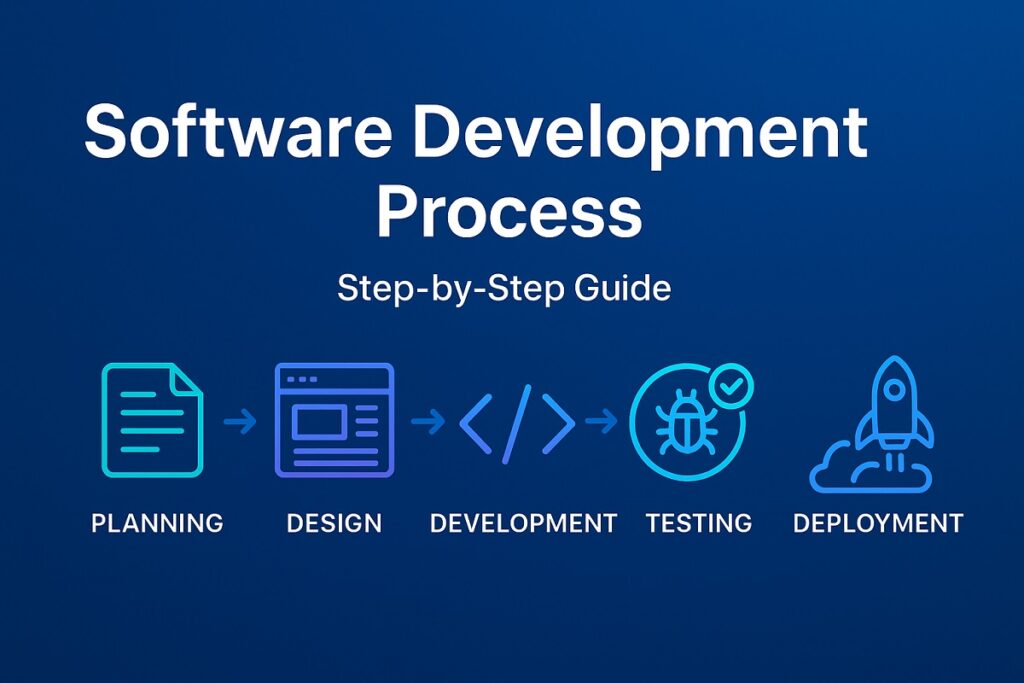

From whiteboard sketches to real-world software, it is great to witness how ideas take shape. All the apps available in the market today were once a roadmap in the making, without code. According to Statista, the software development market is anticipated to increase up to $902.74 bn in the next five years.
Behind every intuitive mobile or web app lies a structured system called as life cycle of software development process. It’s about turning ideas into outcomes through various stages of software development.
Today, this journey is smarter, faster, and more collaborative than ever, thanks to modern methodologies and DevOps best practices that bridge the gap between development and operations. They ensure teams ship high-quality products quicker, with fewer bugs, and better user experiences.
In this blog, we will walk you through the process of software development and its methodologies. So whether you’re planning your next big thing or just curious how top software teams work behind the scenes, be mindful of the SDLC.
Top 6 Steps of Software Development Process to Follow
Every great piece of software, whether it’s a mobile app, SaaS service, or web platform, goes through a sequence of steps to get from concept to code. While tools and technology change, the fundamental processes in the software development process remain unchanged. Let us walk through them swiftly.
Requirement Analysis & Resource Planning
Before delving into development, there must be a clear understanding of what is being built and why. This is the most fundamental stage of any software development process.
It all starts with determining the problem you’re addressing, your target audience, the product vision, and how success will be assessed. For example, if you’re looking for mobile app ideas, you should evaluate the platform (iOS, Android, or both), revenue model, and important features. If it is part of a larger system, such as a CRM or ERP, the examination will be more in-depth.
Once the functional and business requirements have been established, resource planning begins, which includes establishing the technology stack, tools, infrastructure, team size, budget, and timetable. This phase eliminates risk and establishes clear expectations before anything is produced.
Design & Prototyping
With the requirements in hand, it is time to conceptualize the solution.
This stage combines UI and UX design to determine how your software will look and function. Designers create wireframes, mockups, and occasionally interactive prototypes to replicate the user journey. Consider it a dress rehearsal before the actual performance begins.
Your web app ideas will begin to take shape at this point. For example, a health-tracking app may visually demonstrate how users log daily activities, receive recommendations, and track their goals before any code is written.
Good design assures not only a beautiful interface, but also logical user flows, responsive layouts, and accessibility, all of which have a direct impact on engagement and retention rates.
Development (Building the Product)
Once the design has been approved, it is time to code.
Developers turn designs and documented features into operational products. Depending on the project’s complexity, it may require front-end developers (for UI), back-end developers (for logic and database operations), DevOps engineers, and QA assistance.
The methodology employed in the software development process has a significant impact on how development occurs. For example:
- Agile allows for regular updates and iterations.
- DevOps promotes automation and speedy deployments.
- Waterfalls follow a strict linear path.
This stage is sometimes divided into sprints or phases, and work may begin while the design is still being revised, particularly in Agile organizations. This flexibility enables teams to adapt to changes without slowing down.
Testing the Software
Regardless of how good your coders are, faults and malfunctions are unavoidable. Testing guarantees that your product works as intended across a variety of devices, browsers, and environments.
There are various testing procedures, including:
- Unit testing is the foundation of all testing. It examines each software component (including the smallest ones) to guarantee that it performs its intended purpose appropriately.
- Integration testing ensures that the various components of the software function together smoothly. It’s similar to ensuring that your front-end and back-end APIs communicate properly.
- System testing involves evaluating the entire system to ensure that it meets all functional and technical requirements. This test focuses on viewing the larger picture.
- Functional testing ensures that your program behaves as anticipated. If a feature is supposed to send emails, it ensures that it does so correctly.
- Performance testing simulates different workloads to see how your software performs under pressure. Does it remain fast when 10,000 users log in at once? That is what this test determines.
- Acceptance testing is the ultimate gateway. Real users (or stakeholders) test the program in a near-live environment to confirm that it addresses the problem for which it was designed.
Because of continuous integration and deployment pipelines, DevOps best practices frequently allow testing to run alongside development. This improves the process’s efficiency and speed.
Deployment
Once testing is completed and the software is stable, it is ready to go live.
Deployment is the process of transferring an application from development or staging to a live production environment where real users can access it. This could include publishing a mobile app in app stores, hosting a web application on cloud servers, or making internal software public within an enterprise.
At this point, every aspect, from functionality to performance, has been thoroughly tested. The emphasis is now on ensuring a smooth installation, proper configuration, and monitoring for any immediate issues following launch. A well-executed deployment makes the transition smoother for users and lays the groundwork for adoption.
Ongoing Maintenance & Updates
Launching your software is only the beginning. Ongoing maintenance is required to correct bugs, implement updates, and react to changing user needs. In today’s fast-paced technological world, software development procedures must incorporate continual improvement.
Whether you’re refining features in your new mobile app concept or scaling infrastructure for your web app ideas, regular updates keep your software relevant, safe, and high-performing.
Now that you understand the core stages of the software development life cycle, it’s equally important to choose the right approach for executing those steps.
Software Development Process Methodologies
Choosing the right software development methodology is key to building successful digital products. Each approach offers unique advantages depending on your project’s scope, complexity, timeline, and flexibility needs. Below is a quick comparison of the most widely used methodologies to help you find the best fit for your development goals.
| Methodology | Best for | Benefits |
| Waterfall | Fixed scope & clear goals | Simple, structured |
| Prototyping | Unclear requirements | Early feedback, clarity |
| Agile | Dynamic, iterative projects | Flexible, fast changes |
| Incremental | Large, phased projects | Early delivery, less risk |
| Iterative | Evolving needs | Frequent updates, user input |
| Spiral | High-risk, complex builds | Risk control, adaptable |
| V-Model | Stable requirements | Test-driven, disciplined |
| RAD | Tight timelines | Rapid launch, time-efficient |
Build Reliable Software With a Proven Development Process
A successful software project does not happen by luck; it is the outcome of a well-planned and performed development process. From requirements collecting to deployment and beyond, each stage is critical to developing software that is not just functional but also scalable, secure, and user-friendly.
You lay the groundwork for long-term success by following the appropriate development life cycle and selecting the approach that best matches your objectives.
Creating high-performance, future-ready software starts with the right process, clear goals, and informed decisions. With the right expertise and strategy, every stage of development becomes more predictable, efficient, and aligned with your vision.
Contact us today to get expert advice and tailored solutions for your software development journey.